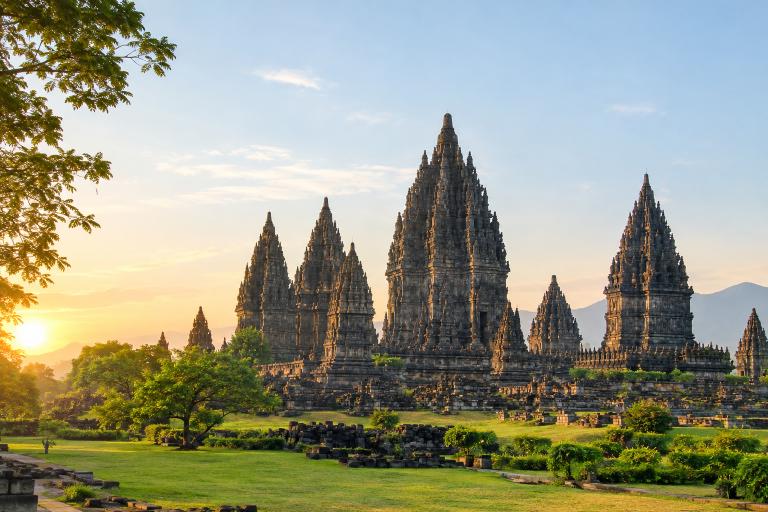
Prambanan Temple Archaeological Park
Prambanan Temple Archaeological Park is one of Indonesia’s most important heritage areas. Located near Yogyakarta, it preserves not only the famous Prambanan Hindu temple complex but also several nearby Buddhist and Hindu sites. For travelers interested in Prambanan temple archaeological park heritage, the park offers a rich journey through ancient Javanese history and culture.
The park is centered around Prambanan Temple, the largest Hindu temple complex in Indonesia. Built during the 9th and 10th centuries under the Mataram Kingdom, Prambanan was designed as a major center of Hindu worship and dedicated to the Trimurti: Shiva, Vishnu, and Brahma. The central Shiva Temple is the tallest structure in the complex, reaching about 47 meters.
The complex contains hundreds of temples arranged in concentric zones. The most sacred structures are placed at the center, while smaller shrines surround them. This layout reflects Hindu cosmology and demonstrates the advanced planning skills of ancient Javanese builders.
One of the most remarkable features of the park is the Ramayana reliefs. These detailed carvings decorate the walls of the main temples and tell the story of Prince Rama, his wife Sita, and the monkey hero Hanuman. The reliefs present themes of loyalty, courage, sacrifice, and the triumph of good over evil.
The archaeological park also includes Sewu, one of Indonesia’s largest Buddhist temple complexes. Located close to Prambanan, Sewu reflects the religious diversity of ancient Java, where Hindu and Buddhist communities existed side by side. Other nearby sites include Lumbung and Bubrah, which add to the historical richness of the area.
Prambanan is also known as Candi Roro Jonggrang. This name comes from a famous Javanese legend about a princess who was turned into stone. According to the story, a prince was challenged to build one thousand temples in one night. The princess tried to stop him by creating the illusion of dawn, and as punishment, she was transformed into stone.
The temple complex faced many challenges throughout its history. Earthquakes, volcanic eruptions, and political changes led to its decline in the early 11th century. Many structures collapsed, and the site was eventually abandoned. It was rediscovered centuries later, and restoration efforts have continued ever since. In 2006, a powerful earthquake in Yogyakarta caused significant damage, requiring further conservation work.
In 1991, Prambanan Temple Compounds was recognized as a UNESCO World Heritage Site. This status highlights the exceptional cultural and architectural value of the area. The recognition covers not only the main Prambanan complex but also the surrounding temple groups, making the archaeological park a protected heritage landscape.
Prambanan is located about 17 kilometers northeast of Yogyakarta city center, making it easy to reach for both local and international visitors. Travelers can combine a visit to the park with other famous attractions such as Borobudur, Sultan Palace, Malioboro Street, and Mount Merapi.
The best time to visit Prambanan is in the morning or late afternoon. Morning visits offer cooler weather and softer light, while late afternoon creates dramatic golden views around the temple towers. Visitors should wear comfortable shoes, bring drinking water, and follow the site’s preservation rules.
Prambanan is more than a tourist attraction. It is a living symbol of Indonesia’s history, creativity, and spiritual heritage. Its towering temples, detailed carvings, and sacred atmosphere make it one of the most important archaeological parks in Southeast Asia.
